
What the Morrigan Actually Asks of You
Mar 30, 2026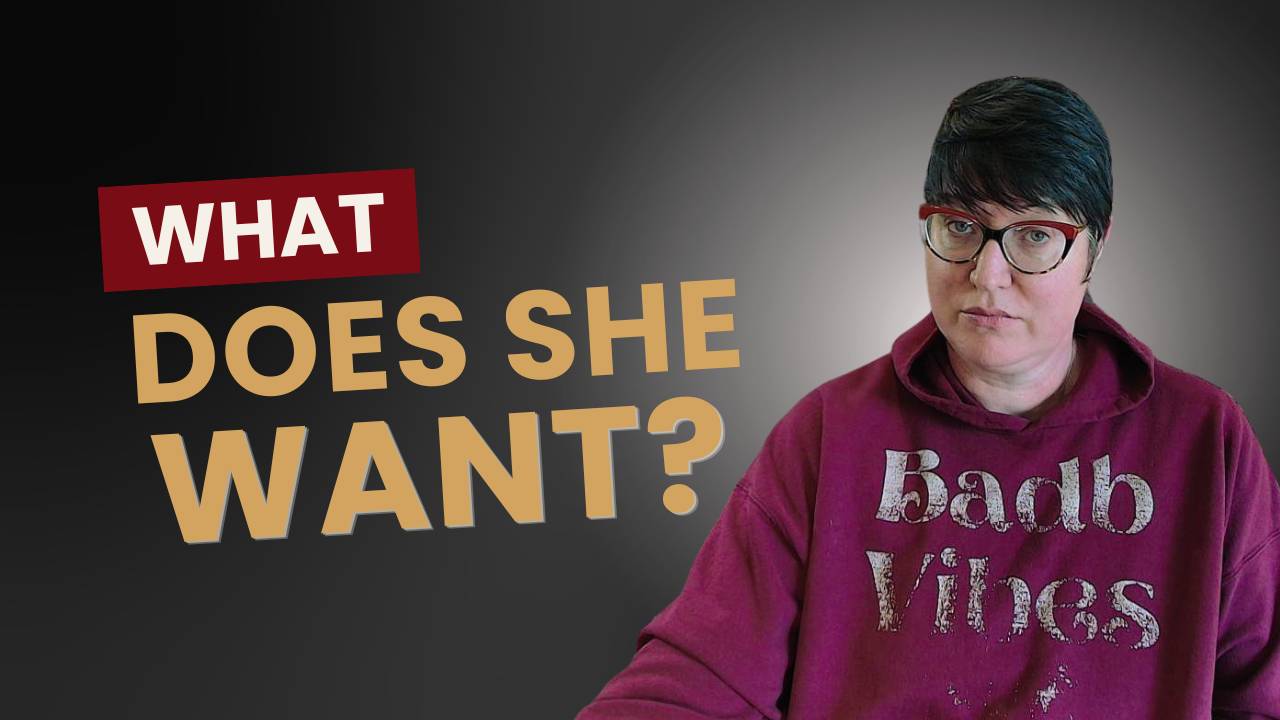
Most people who find their way to the Mórrígan arrive with a question they can't quite put into words. It's not the questions they think they have, the ones about which form she takes or how to build an altar or whether they need to be Irish to approach her.
It's the question sitting underneath all of those: what does she actually want from me?
In this video and article, Lora O'Brien, Priest of the Mórrígan since 2004 and author of The Morrigan: Ireland's Goddess (Llewellyn, 2025), gives a direct and sourced answer to that question, one that cuts through both the fear-based framing and the wishful thinking that dominate most online content about her.
WATCH THE VIDEO ON YOUTUBE (SCROLL DOWN FOR THE REST OF THE ARTICLE) ⤵️
The Two Framings That Miss the Point
There are two popular ways people encounter the Mórrígan, and both of them miss the mark. The first frames her as a terrifying goddess who'll destroy you if you approach her incorrectly, a dark force requiring constant vigilance and spiritual caution.
The second goes the opposite direction, treating her as a powerful ally who cares deeply for you and who'll help you manifest your desires if you use the right words and maintain the right relationship.
Neither of these comes from the Irish sources.
Both are imports from other streams of spirituality that have been mapped onto her because they were already familiar, and the effect is that a lot of people are relating to a projection rather than to the actual goddess of the Irish tradition.
What She Actually Asks For
The honest answer, drawn from thirty years of practice and the primary Irish texts, is that the Mórrígan asks for accountability, and not in the corporate or self help sense. In the older Irish sense: you know who you are, you know what your word is worth, and your actions match your claims.
That alignment between what you say and what you do, between your stated values and your actual behaviour, is what she notices.
Look at how she appears in the primary texts: in Cath Maige Tuired, in Táin Bó Cúailnge, in Táin Bó Regamna. She consistently shows up at thresholds, at moments when things are about to change and a decision has to be made.
She doesn't offer comfort or reassurance. She offers challenge and clarity, and she requires that you respond honestly to what's real rather than what you'd prefer to be true. That's not terrifying, it's demanding, and there's a genuine difference between those two things.
The Gap Between Interest and Practice
There's a difference between being interested in the Mórrígan and being in actual practice with her, and understanding that gap matters if you want to move forward honestly.
Interest looks like reading about her, feeling drawn to her, having experiences you can't fully explain, maybe beginning to build a devotional practice. That's a real and legitimate starting point, and it isn't something to dismiss.
Practice is what happens after the interest settles into something quieter and more sustained. It's showing up consistently rather than only when you feel inspired.
It's reading the actual medieval Irish texts rather than just the modern summaries. It's doing the work she's been asking of you for the past several months that you've been finding very good reasons to avoid, and being honest with yourself about that avoidance.
It also means developing genuine knowledge of the tradition you're working within. The Mórrígan comes from a specific cultural and mythological context, and working with her well means understanding something of that context rather than lifting her out of it and fitting her into a framework that's more familiar or comfortable to you.
What Longevity in this Work Actually Looks Like
Thirty years of practice doesn't produce ease. What it produces is depth, and depth is the thing worth having, because you can't fake it and you can't rush it.
You don't arrive at depth by circling the edges of the work indefinitely. You don't arrive at it by performing devotion for an audience, whether that's online or in person. You arrive at it by doing the actual work, consistently, over time, in private, without expecting immediate results or visible proof of progress.
The Mórrígan has very little patience for impressive performances and genuine respect for quiet, sustained effort. That's not a popular framing in a world that rewards visibility and intensity, but it's the one the sources support, and the one that holds up across decades of practice.
Where Structured Learning Helps
Self directed study is a real path, and some people do it well. But a lot of people who believe they're working independently are doing something that looks like the work from the outside while staying very safely within their existing understanding. That's comfortable, but it isn't growth.
What structured learning provides isn't shortcuts, because there aren't any. It provides a mirror, a framework grounded in actual scholarship, and a community of people making the same commitments at the same time, a Meitheal in the traditional Irish sense of a working group holding each other to the work.
It provides someone who's been doing this long enough to see the difference between genuine difficulty and clever avoidance, and who'll tell you honestly which one you're in.
The Morrigan Intensive runs for six months each year at Morrigan Academy. It moves through the lore, the practice, and what Right Relationship with the Mórrígan looks like in your actual daily life, taught by a living practitioner in Ireland who's been doing this work for over thirty years. It's not a course you complete and file away. It's a threshold you cross, with your eyes open.
Enrolment for the 2026 Morrigan Intensive opens 20 April. Get on the waitlist at morrigan.academy/intensive.
About Lora O'Brien
Lora O'Brien is an Irish Draoi and Priest of the Mórrígan since 2004. She holds an MA in Irish Regional History, managed the Crúachán/Rathcroghan archaeological complex for ten years, and is the author of eight books on Irish tradition, including The Morrigan: Ireland's Goddess (Llewellyn, 2025). She teaches at Morrigan Academy, a specialist online platform dedicated to the Mórrígan.
Frequently Asked Questions
What does the Morrigan actually want from you?
Based on the primary Irish sources and lived practice, the Mórrígan asks for accountability in the older Irish sense: that you know who you are, what your word is worth, and that your actions match your claims. She doesn't want fear or spiritual performance. She wants honest, consistent engagement with the actual work, over time, in private, without requiring visible proof of progress.
How do you start working with the Morrigan?
The most grounded starting point is the Irish sources themselves. Reading Cath Maige Tuired, Táin Bó Cúailnge, and Táin Bó Regamna gives you a foundation in who the Mórrígan actually is in the tradition, rather than who she's been described as in modern online communities. Pair that with consistent, quiet devotional practice rather than dramatic gestures or public declarations.
Do you need to be Irish to work with the Morrigan?
No, but working with her well requires engaging with the Irish tradition's actual context rather than lifting her out of it. That means reading the sources, understanding something of Irish mythology and history, and approaching the work with respect for where it comes from, rather than treating the Mórrígan as a universal archetype to be adapted freely.
What is Right Relationship with the Morrigan?
Right Relationship is the core ethical framework taught at Morrigan Academy. It means engaging honestly and consistently, aligning your actions with your values, doing the work the Mórrígan asks of you rather than the work that feels impressive or visible, and maintaining that commitment over time rather than only when inspired.
What are the primary Irish sources for the Morrigan?
The three most important primary texts are Cath Maige Tuired (The Battle of Mag Tuired), Táin Bó Cúailnge (The Cattle Raid of Cooley), and Táin Bó Regamna. Academic sources include the war goddess dissertation by Angelique Gulermovich Epstein and the work of Morgan Daimler.
Lora O'Brien's book The Morrigan: Ireland's Goddess (Llewellyn, 2025) brings these sources together with thirty years of lived practice.
Don't Miss Enrollment!
Join to receive the latest updates as we open our
6 Month Intensive Programme ONLY once per year.
We hate SPAM. We will never sell your information, for any reason.
![Understand the Morrigan by Mastering the Cath Maige Tuired in One Month [even if you're juggling a hectic schedule, unsure about the Irish language, and feel overwhelmed by the complexity of the Morrigan's lore.]](https://kajabi-storefronts-production.kajabi-cdn.com/kajabi-storefronts-production/file-uploads/themes/2153484210/settings_images/f22efa1-18b7-c42f-a324-c70e4af6106_48b0ce90-e56c-4cd5-b929-1f7bd7edfa8a.png)


